Thursday, 10 September 2015

2.3 – Outline the potential progression routes into the film industry and wider sector


What could be your potential progression route into the film industry?


Getting into the industry can be difficult; it’s about who you know and how you come across. Making a good, lasting impression is what will get you more work as people will keep requesting you. It requires dedication and grasping opportunities.

Runner: make contacts, get names out, fill CV, experience on-set, get to know how sets/companies work

Film school: learn skills needed on set

Work on short films: large role in small projects, learn skills at own pace

Runner -> 3rd/2nd AD -> 1st AD -> director

Runner -> AC -> Cam Op -> DoP

Write short films -> write screenplay

There is the option of getting stuck in as a runner/camera assistant and doing your time, working your way up the ladder. The good thing about this is that I may get to be involved in big projects and end up with great credits on my CV, learning from top names in the industry. However it does take a long time to progress into a role where I have creative input. On the other hand, if I want be to be involved in the creative process from the beginning, I could set up as a freelancer and work on as many small projects as possible. This meant that I will be problem solving and learning a lot on the job.

Producing online content is a great way to create professional development opportunities. Once your videos gain some attention, companies and individuals come to me with projects they want me to be involved with...

The creative media sector is growing, meaning the line between traditional film and modern media is beginning to blur. Original Netflix’s shows are testament to this; streaming television only available online is an entire new phenomenon.

A degree in Media Studies or a more specialised degree will be of value especially if it has a work- experience or gap year within it.


The BFI Film Academy is a very useful way of finding out what aspect I may be interested in and what course, internship or apprenticeship to apply for as well as ideas about work experience and general ways of making contacts and adding skills to my CV

Wednesday, 9 September 2015

2.4 – Outline the relationship between the film industry and wider creative media sector


How is the film industry influenced by the wider creative media sector?


Create a diagram showing the relationship between film and the wider creative sector

The creative media sector covers advertising, marketing, games design, fashion design, radio and film. The skills required to work in any of these sectors are very similar, in that they all require a high degree of creativity, plus particular technical skills. Although they are all individual sectors, the film industry require expertise and input from most of them, particularly fashion, marketing and advertising. All of these sectors attract people with strong creative skills and natures (although all do also require people with strong business and management skills).

Digital sectors are becoming more closely related to the film industry, especially with the use of CGI and special effects. A person working in digital use will generally have more expertise in image manipulation than those employed by the film industry. The use of digital techniques is also an important consideration with relating to budget, as it is considerably cheaper to use digital images rather than manipulate around actors or stunt people, for example.

The use of You Tube by amateur film-makers has proved a crucial test-bed for ideas and many have come to the forefront of the industry due to their popularity. 


The Games industry has had a huge surge in its creative development with links to games like Halo, Tomb Raider, as well as the book and film links from Harry Potter, Lord of the Rings, the Hobbit and the Hunger Games franchises. This will also now increase with the launch of the next generation of Star Wars films.


Marketing sectors can assist with advertisement and promotion of the film, as an outsourced function, rather than the film company having this expertise in-house. This sector may also assist with obtaining additional sources of funding, such as crowd funding.

Tuesday, 8 September 2015

3.1 – Describe the impact of your own behaviours on others


How do you feel you have worked with others on the production team?

What was the impact of your behavior on others?
My role within the team was as an animation designer and after the initial filming I helped compose some of the music. I felt that I was a good member of the team as I was able to stay positive and keep everyone focused on their tasks. I have a positive mental attitude which helped keep everyone friendly and communicating with each other.

I feel that I was a good member of the team to have around as I was able to communicate with different sections of the team; this enabled me to learn a lot as well as make sure that everyone stayed calm and focused. If things became stressful I was very good at pinpointing the problems and making sure everyone relaxed and re-thought the problem before continuing. 


Monday, 7 September 2015

3.2 – Identify the key factors for effective working relationships


What qualities are needed to work well with others?


When working as an effective team a good deal of time and effort needs to be put in by each member for the process for it to work. Everyone should be involved in the common goal but it is the manager’s role to make sure that everyone contributes as well as listening to all the ideas put forward before deciding on the path to take. A team effort will only move forward positively with a good end result if everyone agrees in the direction they are taking and feels that their opinions are valued and heard, even if they are not used in the final production.

Listening to the other team members and making sure everyone feels that they are being communicated with is very important

As stated previously time-keeping is very important for all members of the team, if there are problems they need to be assessed immediately. Punctuality is the key to a happy work environment


A positive attitude is very important to maintain as each member of the team can keep everyone on track.

Ability to self-analyse and make sure that you learn from your own mistakes as well as those of the rest of the team

Respect- treating others in the way you yourself want to be treated will allow the team to be effective.


Sunday, 6 September 2015

3.3 – Interact with others to encourage collaborative thinking and teamwork


Give an example of when you worked with others to encourage collaborative thinking and teamwork


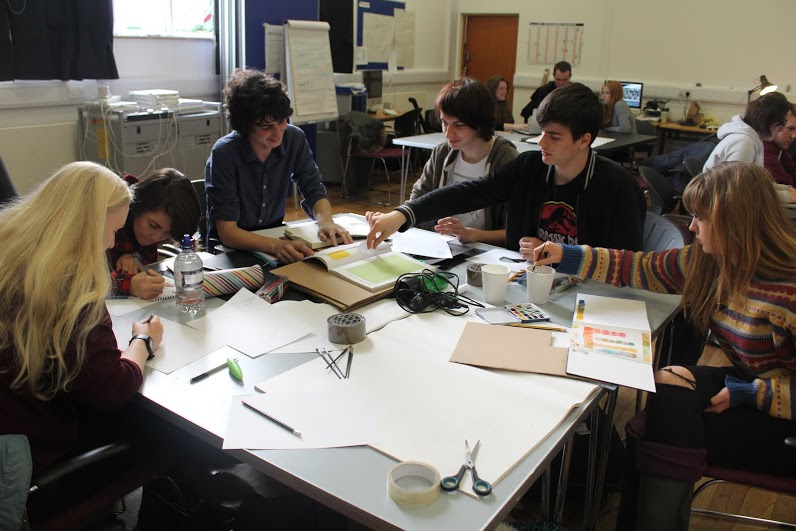
Whilst on this course I got to work in a team for many situations, discussing what we thought could and should happen. Before the production had began we had to decide on what our plot / script would be so that it would be easy for the whole team to follow. This process took a while as we all had lots of ideas for our set theme of ‘Ellesmere’: whether we should follow traditional folk law or make something original up. Discussions took up a lot of time, but we had to be thorough for all ideas; seeing if we had any plot holes or problems with planning / costume / set / etc…

Initially everyone was shouting at each other trying to get their ideas heard, I decided that everyone should get a chance to present their idea whilst everyone else listened and then we would all decide as a group which one was best suited to our group in the timescale. At that point  everyone calmed down and thought about what would be best for the group and presented a short synopsis of their idea.

In the end it was decided that we would base our short film on Mad Jack as the character has many tales that we thought we could turn into one giant tale (not using them all – but a few). We also decided that it would be sensible to use the ‘Ellesmere Bells’  that ring at the bottom of the mere when there’s danger arising; connecting the film to Ellesmere directly.


Saturday, 5 September 2015

4.1 – 4.2 - Identify the resources needed to meet film production requirements and the technical skills and equipment required for your production role


Identify the resources needed to meet film production requirements and the technical skills and equipment required for your production role


What is your production role?
When it came to production I was initially part of the stop motion team, collecting leaves as well as finding suitable loctations to shoot. I suggested that it was best to shoot in a place where the mere was visible so that it established where we were – as well as being recognisable to the locals.
Once we had chosen the location we moved onto the filming process. I made the leaves ripple by moving them with my feet, shuffling to start off with and eventually kicking them in the air.
I also took part in the 2D stop motion where we drew bottles on dark card and cut them out and then used the light board to give a more vintage realistic feel by using card to reflect the light from around the edges and create an eerie feel to the scenes.
I have done some stop motion before but this was the first time that I had actually used the equipment properly and actually created the parts to the moved around. I learnt a lot about the use of background and shade in creating atmosphere and a 2D image that was believable.


What equipment and planning documents do you need to carry out this role?
The resources that were needed to meet the film requirements were:
Crew -
  • Director.
  • Producer.
  • Camera Operator.
  • Boom Operator.
  • Editor.
  • Actors within film.
Equipment -
  • Laptops for editing (Apple Macs) + Editing software (Premiere Pro).
  • Canon.
  • Camera batteries (x3). + Battery charger.
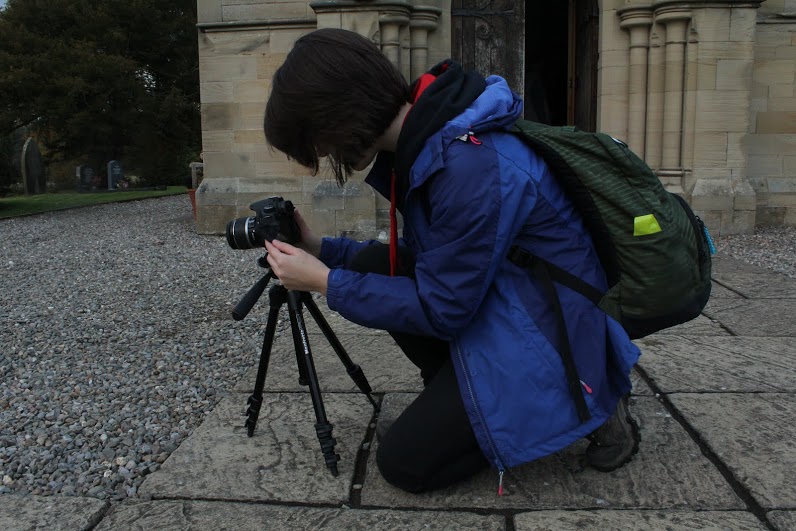
  • Camera tripod.
  • Memory cards.
  • Radio Mic.
  • Boom Mic.
  • Headphones for Boom Operator.
  • Camera bag.
  • Power and power packs
Other -

  • Any props needed for shoot.
  • Pre-production documents – Contact details; risk assessments; storyboard; shot list; time table for shoot day; consent forms; location of shoot.
  • Transport for equipment to location of shoot.
  • Transport for crew to location of shoot.
  • Knowledge and training- of both the equipment and location
  • Health and safety- training and  a first aider present and kit plus emergency plan and back-up identifies, risk assessments for the location properly carried out
  • Editing facilities to ensure a professionally finished product

Friday, 4 September 2015

4.3 - 4.4 - Review your own technical skills and use of equipment and Identify sources of feedback on your performance


How well do you think you have carried out your role in production?
In this production my role was to be one of the set / character designers, as well as being a stop-motion animator - which I thought I carried out thoroughly as I always offered input into the group discussions, as well as ensuring that I was constantly doing something. 

How do you think your technical skills have developed in this role?
My technical skills, in my opinion, have improved majorly as I had originally had a vague idea how to operate professional animator / editing programs , but with some one-on-one lessons from my tutors / peers I can now do perform at least the very basics on each program.. This has not only given me confidence in myself, but in the amount of effort that I put into a production - linking with what I said earlier. 

I had a lot of things to learn and one of the most important was getting my ideas across in a large group. I learned a lot of new skills during this week and I will be taking them forward into all the other projects that I will be taking part in.